Northeastern presentation to junior engineers in the age of AI
An AI agent revolution is afoot: How can the next generation of software engineers thrive?
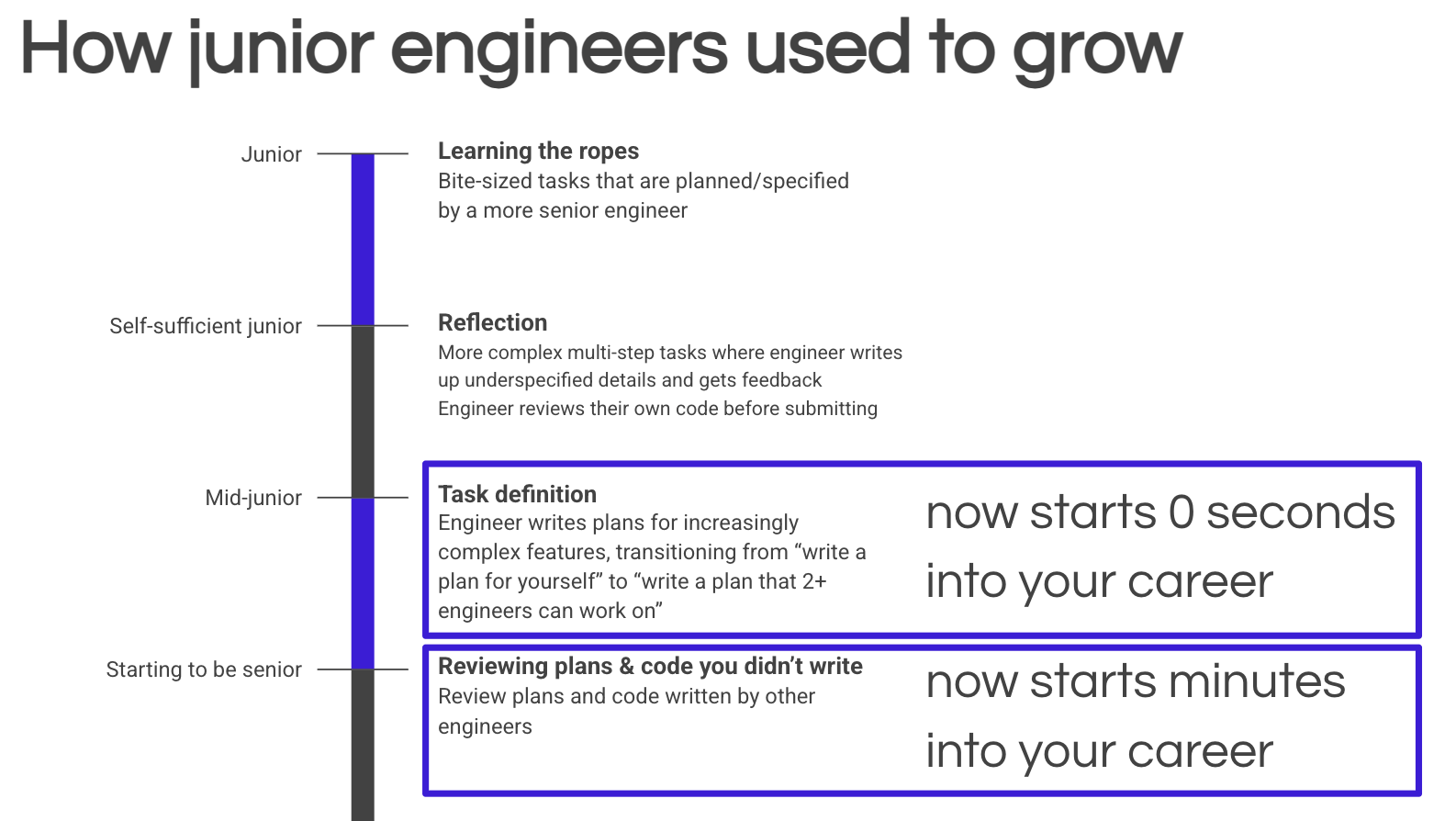
Late last year, my grad school colleague Chen-Hsiang (Jones) Yu invited me to give a talk to students at Northeastern University in his Software Engineering classes. I’ve posted the full slides of the talk here. If I could pick only one slide to represent the talk, it’s this one:
 |
|---|
| A timeline of the professional experiences a junior engineer used to develop over several years. Skills that used to take years to hone are now required in your first moments with a coding agent. |
That slide speaks most concisely to the compression of what used to be several years of professional growth that junior engineers experienced. Previously a company would wait years before asking new engineers to meaningfully define work that someone else would complete, and even longer to start reviewing plans and code they didn’t write. Those two skills are being emphasized seconds and minutes into an engineer’s career, which changes how we should think about mentorship and growth for junior engineers.
The talk covers how software engineering is changing with a focus on junior engineer mentorship, and offers some ideas for getting hands-on experience in task definition and code/plan review. I wrote about this in mentoring junior engineers in the age of coding agents. In the last section of the talk, I covered durable skills that I believe will remain valuable even while agents write more of the code. I wrote about that topic in four questions agents can’t answer.
A huge thank you to Jones and his students for the invitation and their great questions. It’s clear many students in the room had a strong sense of the big change happening in the industry they were about to join, and the discussion after the talk reflected their curiosity.
I write each post myself. Here's how I use AI in my writing process.